Blog
Everything we have written about templates, motion and AI video.
How to Make 0x100x Crypto Shorts (No After Effects)
Tutorial June 13, 2026
This Template How-to explains the 0x100x aesthetic (crypto/DeFi YouTube Shorts and TikTok's dominant motion graphics style in 2026), why it normally requires After Effects + Deep Glow plugin, and how AutoAE's new 0X100x Style Collection replicates it without any AE knowledge. Maps 4 templates to the 60-second retention-first content framework (Hook/Logic/Alpha/CTA) used by leading DeFi and faceless finance creators. Includes the visual characteristics of the style, step-by-step for each template, assembly guide, If/Then creator-type guide, and 5 FAQ.

AI Video Commercial Use: What's Actually Safe to Sell in 2026
AI Tools Analysis June 10, 2026
Whether AI video is safe to sell in 2026 comes down to three separate risks, not one: who owns the copyright, where the model's training data came from, and whether your platform's license actually grants commercial rights. Fully AI-generated output often can't be copyrighted at all in the US, and several generators carry preview-only or unsettled-litigation flags. This guide breaks down what's safe to sell, what isn't, and why template-based motion — where you supply your own text, logo, and footage and the license is spelled out per tier — sidesteps most of the ambiguity.
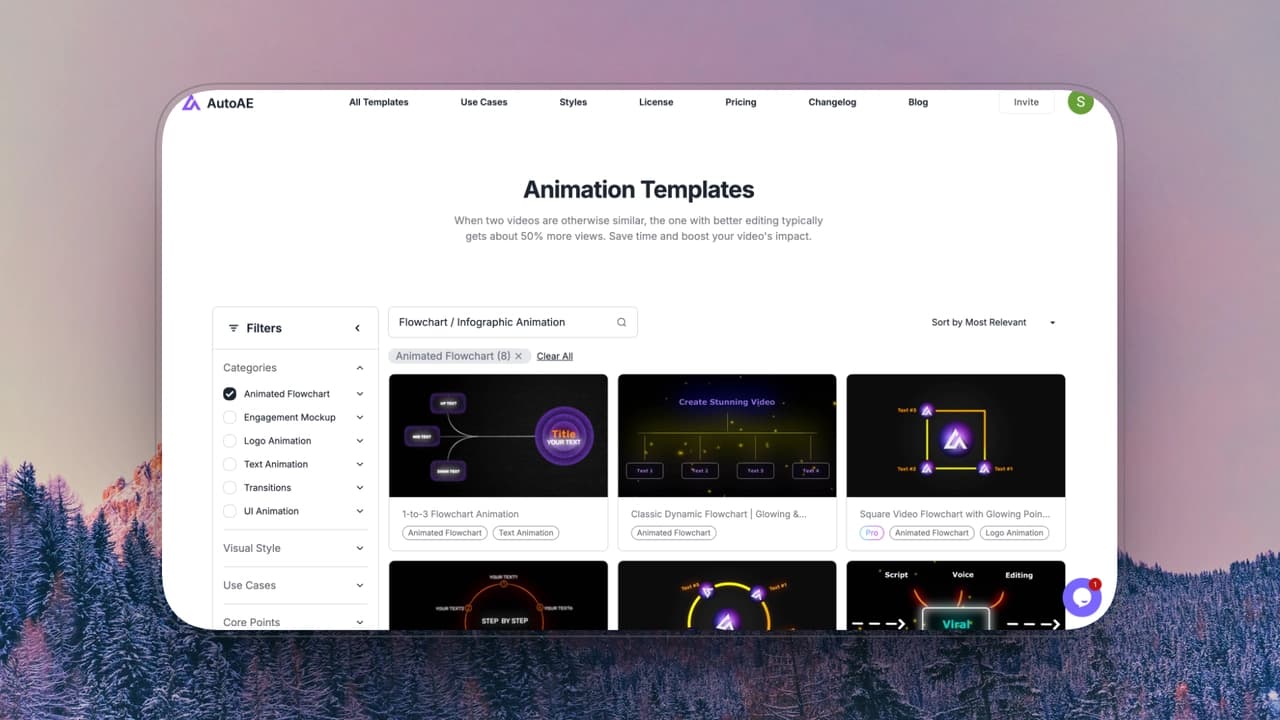
Top 8 Flowchart & Infographic Animation Tools for Explainers
AI Tools Analysis June 10, 2026
This article introduces 8 top flowchart and infographic animation tools, evaluating them by motion control, ease of use, production speed, scalability and value for money. It details each tool’s features, pricing, pros, cons and suitable users. Adobe After Effects suits pro designers, AutoAE and CapCut fit short‑video creators, Visme excels at data visuals, while Vyond and Powtoon target corporate and education users. It helps users pick tools based on control, speed and needs.
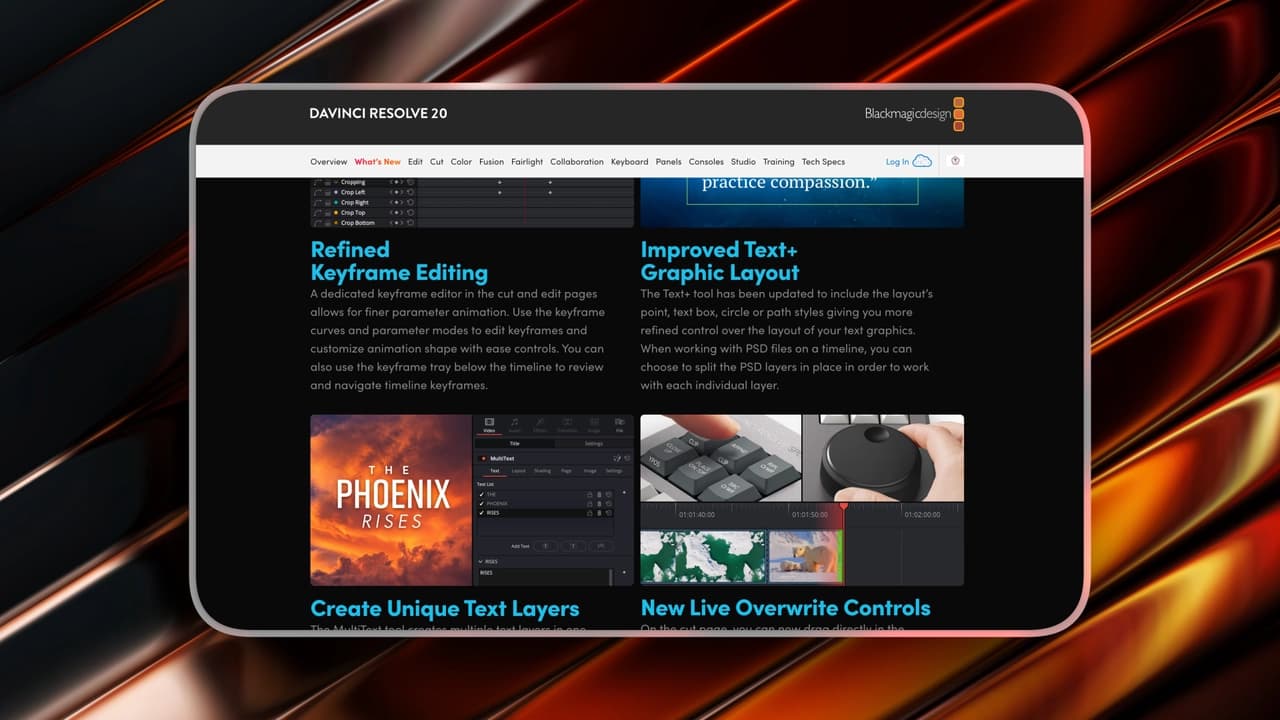
Top 8 After Effects Time-Savers (Tools + Plugins + Workflows)
AI Tools Analysis June 9, 2026
This article introduces 9 time‑saving tools, plugins and workflows for After Effects to boost efficiency. It covers FX Console, Flow, MoBar, Motion 4, AutoAE, Ease and Wizz, Overlord, True Comp Duplicator and Duik, with their uses, pricing and strengths. It also recommends tool combinations for short‑video creators, long‑form teams, professional designers and solo makers, helping users pick tools to fix workflow bottlenecks.
Motion Canvas vs Remotion (2026): Procedural vs React
June 8, 2026
Motion Canvas and Remotion are both code-first ways to make video, but they think about animation differently. Motion Canvas is a TypeScript, procedural animation tool with its own editor, popular for animated explainers and code demos. Remotion renders video from React components and is strongest for data-driven, automated video. This guide compares them on authoring model, what each is best at, and licensing, then names the no-code third path for people who want branded video without writing TypeScript or React at all.

3D Mockups vs Branded Product Video: When a Device Shot Isn't Enough (2026)
June 8, 2026
3D mockup tools like MockRocket drop your app screenshots into animated device scenes, an iPhone, a MacBook, an iMac, in seconds, which is great for a clean product shot. But a device mockup is one ingredient, not a finished branded product video. This guide explains what 3D mockup tools do well, where they stop short of a full branded clip with hooks, motion graphics, and consistent branding, and how to combine a mockup with a Motion Agent to ship a complete product video without editing or code.

6 HeyGen Video Agent Alternatives (2026): What to Use If You Don't Want a Talking Avatar
AI Tools Analysis June 8, 2026
HeyGen Video Agent is the leader for avatar-led training, sales, and corporate L&D. But most creators don't need a talking head — they need branded motion graphics, social-first pipelines, or just a cheaper option. Here are 6 HeyGen alternatives, each picked for a specific reason to leave: Agent Opus, AutoAE, Krea AI, CrePal, Synthesia, and D-ID. Start with the no-avatar shortlist.
How to Add Motion Graphics to Your CapCut Videos (The Branded Layer Method, 2026)
Tutorial June 8, 2026
Step-by-step workflow tutorial showing CapCut creators how to import AutoAE motion snippets as an overlay layer to add branded motion graphics that aren't in CapCut's default library. Covers both desktop and mobile import methods, Blend Mode settings, and where in a video to place hooks, outros, and transitions. Positions AutoAE as the motion layer complement to CapCut's edit layer — not a replacement.

MotionForge vs Remotion (2026): The Free Open-Source Programmatic Video Option
June 8, 2026
MotionForge is a newer, free, open-source framework for deterministic programmatic video, built on React, Next.js, and WebGL, and it is increasingly searched as a Remotion alternative. This guide compares MotionForge and Remotion honestly on maturity, features, and licensing: MotionForge's pitch is free-forever with no commercial threshold, while Remotion is the established tool with a bigger ecosystem and a company license above a size threshold. It also covers the no-code third path for people who want branded video without writing React at all.

HyperFrames Templates (2026): Where to Find Them and How They Work
June 8, 2026
People searching for HyperFrames templates usually want ready-made compositions they can reuse instead of building from scratch. This guide explains where HyperFrames templates actually come from today, HeyGen's open-source launch-video compositions and the example projects in the repo, since there is no large template marketplace yet, how to remix them, and what that takes. It also points to the no-code path: a Motion Agent with thousands of branded templates you call in plain language, for people who want a finished clip without editing HTML.

Is MotionForge Free? The Open-Source Video Framework's License, Explained (2026)
June 8, 2026
MotionForge is free. It is an open-source framework for programmatic video that you can use, including commercially, with no per-render fees and no company-size thresholds. The catch is the usual one for code-first video: a finished video still costs developer time and render compute. This guide explains MotionForge's license in plain terms, what 'free forever' does and does not cover, how it contrasts with Remotion's paid company tier, and the no-code path that prices the finished clip instead of the toolkit.
How to Make a Twitch Stream Intro and "Starting Soon" Screen Without After Effects (2026)
Tutorial June 7, 2026
The 30 seconds before you go live decide who is still watching when you do. Most streamers solve it badly: a $35 OWN3D pack shared with thousands of other channels, an After Effects project that eats an evening, or a static PNG. This guide builds the full 4-screen Twitch motion kit with AutoAE instead: Intro, Starting Soon, BRB, and Outro, all branded, animated, and rendered in the browser without After Effects.
What Is HyperFrames? HeyGen's HTML-to-Video Framework, Explained (2026)
AI Tools Analysis June 6, 2026
HyperFrames is HeyGen's open-source framework that turns HTML and CSS into video, built so AI coding agents can write the markup. It is a rendering engine, not a video editor, and despite a common myth it does not generate footage with AI; it only renders what a browser can draw. This guide explains how it works, what it can and cannot do, that it is free under Apache 2.0, how it compares to Remotion, and the no-code third path for people who do not want to write HTML or React at all.
Remotion vs Motion Agent: Code-as-Video vs Calling-as-Video (2026)
AI Tools Analysis June 5, 2026
Remotion is an open-source React framework where you write code to render video, frame by frame. A Motion Agent is the opposite mental model: you call a branded, market-validated template and ship in minutes without writing code. This guide defines both categories, contrasts code-as-video against calling-as-video, and shows which approach fits developers building data-driven pipelines versus marketers and creators who need a finished hook by Friday.
No-Code Remotion Alternative (2026): For People Who Don't Want to Write React
AI Tools Analysis June 3, 2026
Many people searching for a Remotion alternative don't want to write React at all — they want a finished motion clip. AutoAE is a no-code platform on an After Effects-class engine: 3D, motion blur, and particles are native, so 'no-code' doesn't mean low-ceiling. Templates render in minutes for $12/month or $2.90 per export, used by 1,000,000+ creators. If you do want programmatic control, Remotion is the right pick.
HyperFrames for Marketers: Can a Non-Developer Actually Use It? (2026)
AI Tools Analysis June 3, 2026
HyperFrames is getting attention from marketing teams who want on-brand video, but it was built for developers and AI agents, not for non-technical marketers. This guide gives the honest answer on whether a marketer can use it solo, what it actually takes (a local toolchain, HTML, and the willingness to debug a render), when it makes sense for a marketing team, and the no-code path that gets you a branded hook or title in minutes without writing a line of code.
Remotion Alternatives Compared (2026): A Matrix of 5 Tools by Approach, Speed, and Cost
AI Tools Analysis June 2, 2026
Remotion alternatives split into three camps: code-first frameworks (Revideo, Motion Canvas, Rendervid), automation APIs (Creatomate), and no-code finished-template tools (AutoAE). Code tools win programmatic batch jobs. Creatomate wins template-plus-API automation. AutoAE wins when you want advanced motion fast without writing code, at $12/month or $2.90 per export. This matrix compares all five by approach, learning curve, time-to-first-video, best-fit user, cost shape, and visual ceiling so you pick by job, not by hype.
How to Brief a Motion Agent in 60 Seconds (5 Patterns Pro Creators Use)
Tutorial June 1, 2026
Pixel generators like Veo and Sora need a cinematographer's vocabulary — camera move, lens, continuity rule. A Motion Agent is a different animal because you are calling a curated library, not generating pixels. This article gives you five brief patterns, one per common short-form job — Hook, Product Walk, Pitch Close, Recap, Quote-Card — each under 60 seconds to type. Adopt one pattern per video type and your weekly cadence flips from 'what should I make today' to 'fill the slot.